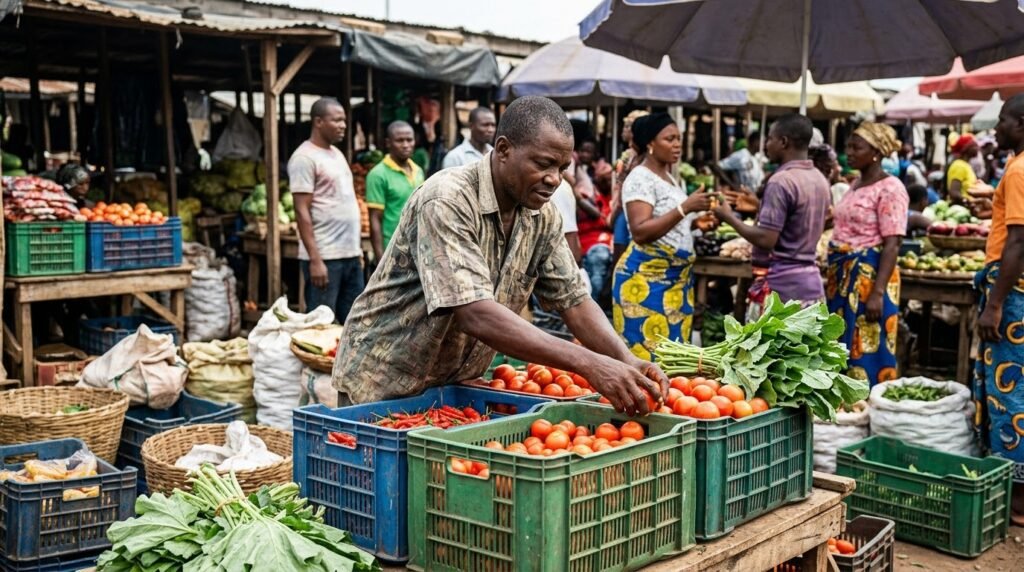
FARMING BUSINESS • LOCAL MARKETS • NIGERIA
Farmers Market Near Me: How to Find Local Farm Produce Markets and Agricultural Buyers
Finding a nearby farmers market can help households buy fresh produce and give farmers a place to meet traders, retailers and potential customers. But the nearest market is not automatically the best market for your farm. The right choice depends on what you produce, how much you have to sell, what buyers need and how much it costs to get your goods there.
This guide explains how Nigerian farmers, small agribusiness owners and produce buyers can identify suitable local markets, check market arrangements, compare selling options and plan transactions more carefully.
What Does “Farmers Market Near Me” Mean?
A farmers market may refer to an open market selling fresh produce, a wholesale food market, a farm-gate sales point, a cooperative collection centre or an organised market where producers sell directly to consumers.
In Nigeria, the most useful option depends on the transaction. A household buying a small quantity of vegetables has different needs from a farmer trying to sell several bags of maize or a restaurant purchasing fresh produce every week.
| Your goal | Where to start looking | What to confirm |
|---|---|---|
| Buy food for home | Nearby retail markets, produce stalls and farm shops | Freshness, unit price, quantity and opening arrangements |
| Sell vegetables or fruit | Retail traders, produce markets, restaurants and food vendors | Quality standards, volume, price and delivery time |
| Sell grains or tubers in bulk | Wholesale markets, bulk traders, processors and aggregators | Grade, bag weight, minimum quantity and weighing method |
| Find regular buyers | Retailers, caterers, hotels, processors and repeat wholesale customers | Demand schedule, payment terms and consistent supply requirements |
| Source produce for a business | Wholesale traders, producer groups and agricultural suppliers | Available stock, traceability, transport and replacement arrangements |
How to Find a Farmers Market Near You
1. Search using your town or neighbourhood
Begin with the name of your town, local government area or neighbourhood. Searches such as “fresh produce market in [your area],” “vegetable wholesalers near [your area]” or “farm produce buyers in [your state]” are usually more useful than searching only for “farmers market.”
In Nigeria, many suitable markets are known by their local names rather than being listed under the phrase “farmers market.” Ask nearby traders, farmers, food vendors or agricultural cooperative members which markets handle your particular crop.
2. Ask people already working in the agricultural value chain
Speak to farmers, transport operators, market traders, produce aggregators and local food businesses. They may know where particular products are traded, when buyers normally arrive and which markets handle bulk quantities.
Do not rely on one person’s recommendation alone. Confirm the market’s location, current arrangements and whether it accepts the product and quantity you intend to sell.
3. Check maps and local business listings
Search for markets, wholesale food traders, farm shops and agricultural supply businesses on your preferred map or business directory. Review the location and available details, but do not assume that a listing confirms current opening hours, active buyers or willingness to purchase from new suppliers.
Call or visit through a safe, established route to verify the information before arranging transport. If you cannot find a reliable contact, ask a known local trader or cooperative for a second source of confirmation.
4. Look for producer groups and collection points
Some farmers sell individually, while others combine produce through cooperatives or organised collection arrangements. A group may help members coordinate quantities or reach larger buyers, but its rules, fees and payment process should be understood before joining.
Ask who weighs the produce, how quality is assessed, when members are paid and what happens if a buyer rejects part of a delivery.
5. Compare more than one possible market
A market farther away may offer a better price, but transport, loading, handling, spoilage and time can reduce the difference. Compare the amount you expect to keep after all selling costs rather than choosing based on the advertised price alone.
How Farmers Can Find Buyers at a Local Market
If you are selling produce, identify potential buyers before harvesting or arranging a long journey. This is especially important for perishable crops that can lose quality while waiting for a sale.
Identify the right buyer for your product
- Vegetables and fruit: retailers, market traders, restaurants, caterers and produce distributors.
- Grains and legumes: wholesalers, food retailers, processors and bulk commodity traders.
- Cassava, yam and plantain: produce traders, food processors, retailers and institutional kitchens.
- Eggs, poultry and fish: retailers, restaurants, food vendors and buyers with suitable storage or handling arrangements.
- Processed agricultural products: grocery shops, distributors, restaurants and businesses that use the product as an ingredient.
These are possible buyer categories, not confirmed orders. Verify each buyer’s actual requirements, purchasing capacity and transaction terms.
Prepare a clear produce offer
Before contacting a buyer, write down the essential details:
- Product name and variety, where relevant.
- Quantity currently available and expected harvest date.
- Quality, size, grade and packaging.
- Collection point or delivery area.
- Price basis, such as per kilogram, basket, crate or bag.
- Whether the quoted price includes packaging, loading or delivery.
- Payment and inspection arrangements.
A specific offer makes it easier for a buyer to decide whether your produce meets their needs. Avoid describing an estimated future harvest as available stock if it is not yet ready.
Calculate Your Real Selling Return
A high selling price does not necessarily mean a better result. Work out the likely amount left after the costs of taking the produce to market.
Use this simple formula:
Expected sales revenue − transport − loading and market charges − packaging − expected spoilage or rejected produce − other selling costs.
Worked example using hypothetical figures
Imagine a farmer has 100 units of produce and is comparing two selling options. These numbers are for illustration only, not current market prices.
| Item | Nearby market | Farther market |
|---|---|---|
| Expected sales revenue | ₦120,000 | ₦140,000 |
| Transport | ₦8,000 | ₦20,000 |
| Loading and market charges | ₦4,000 | ₦6,000 |
| Packaging and handling | ₦3,000 | ₦4,000 |
| Estimated spoilage or rejected stock | ₦5,000 | ₦8,000 |
| Estimated amount remaining | ₦100,000 | ₦102,000 |
In this example, the farther market produces only ₦2,000 more after the listed costs, despite the higher expected sales revenue. The farmer should also consider journey time, payment reliability, unsold stock and the risk of price changes before deciding.
Replace these figures with your own quotations and realistic estimates. If buyers may reject produce or not purchase the full quantity, include that risk rather than assuming everything will sell.
Questions to Ask Before Taking Produce to Market
- Is the market operating on the day I intend to arrive?
- Does it handle my crop and the quantity I have available?
- Do buyers normally purchase at retail, wholesale or farm-gate quantities?
- How will the produce be graded, measured and weighed?
- Who pays for unloading, packaging, market charges and transport?
- Can I contact a buyer before leaving the farm?
- When and how will payment be made?
- What happens if the buyer rejects some of the produce?
- Is there a safe plan for unsold or damaged stock?
- What is my expected net return after costs?
These questions can prevent avoidable trips and misunderstandings. Where possible, keep written records of agreed quantities, prices, delivery arrangements and payments.
How to Check a Buyer Before Agreeing to a Sale
Finding a buyer is only the beginning. A profitable transaction also depends on reliable communication, clear terms and safe handling of money.
- Confirm the buyer’s identity and business location using reasonable checks.
- Ask for the required product specifications and quantity in writing.
- Agree on the price unit and the method used to measure or weigh the produce.
- Confirm whether payment is made before delivery, on delivery or under another documented arrangement.
- Be cautious about unexplained advance fees or pressure to pay an individual before a supposed purchase can proceed.
- Keep delivery notes, receipts, messages and payment records.
- For a large first transaction, consider a smaller test order where commercially practical.
How to Prepare Produce for a Market Visit
Preparation should match the crop. The goal is to protect quality, reduce avoidable losses and present goods in a form buyers can inspect easily.
For fresh vegetables and fruit
- Harvest at an appropriate stage for the intended buyer and journey.
- Separate visibly damaged or spoiled items from sound produce.
- Use clean, suitable crates or packaging where practical.
- Protect the produce from excess heat, crushing and unnecessary delays.
- Confirm handling requirements with buyers before loading.
For grains, beans and other dry produce
- Check moisture, cleanliness and visible contamination.
- Use suitable dry storage and packaging.
- Agree on bag size, weight and quality grade before delivery.
- Keep bags protected from rain and ground moisture during transport.
For fish, eggs, meat and other sensitive products
Confirm appropriate hygiene, temperature control, transport and legal requirements for the product. Do not use the same handling method for every type of produce.
Build Your Farm’s Business Presence
Finding local buyers is one part of selling successfully. A farm that wants repeat orders may also need a simple website, customer enquiry process or online marketing system.
Systeme.io is a business software platform you can evaluate for digital business tasks. It is not a farmers market, buyer directory or guaranteed source of agricultural customers.
Explore Tools for Farm Business MarketingAffiliate disclosure: Digital Software Guide may earn a commission if you register through this link, at no extra cost to you.
Build Repeat Customers Instead of Depending on One Market
A market visit can generate a sale, but repeat customers can make planning easier. Consider building a small list of buyers who regularly use your products.
- Record each buyer’s name or business, contact details and product requirements.
- Ask how frequently they buy and what quantities they usually need.
- Send accurate availability updates before harvest or delivery.
- Keep agreed delivery times and quality standards realistic.
- Record every sale, expense, payment and outstanding balance.
- Review which customers and sales channels leave the best return after costs.
Do not promise a quantity you cannot reliably supply. If your harvest is seasonal, tell buyers when availability may change and avoid accepting orders you cannot fulfil.
Printable Local Market Planning Worksheet
Complete this worksheet before travelling to a market or arranging a bulk delivery.
- My town or farming area: ______________________________
- Market or buyer I plan to contact: _______________________
- Product and quantity available: _________________________
- Expected harvest or collection date: ____________________
- Buyer-confirmed price and unit: _________________________
- Estimated transport and handling costs: _________________
- Expected net return after selling costs: _________________
- Buyer contact and confirmation: ________________________
- Payment and weighing arrangements: ____________________
- Backup plan for unsold produce: ________________________
Use confirmed information wherever possible. If a buyer has not confirmed a purchase, mark the sale as uncertain rather than treating it as guaranteed income.
Frequently Asked Questions
How do I find a farmers market near me in Nigeria?
Search using your town, neighbourhood or local government area alongside terms such as fresh produce market, wholesale food market or farm produce buyers. Ask local farmers and traders for recommendations, then verify the location and arrangements before travelling.
Can I sell my harvest at any local market?
Not necessarily. Some markets focus on retail sales, while others are better suited to wholesale quantities or particular products. Confirm that your crop, quantity and quality meet the market’s requirements.
Should I choose the market offering the highest price?
Compare the amount you expect to keep after transport, handling, market charges, packaging, spoilage and other costs. A higher selling price may not produce a higher net return.
Can a small farmer sell directly to restaurants or shops?
Potentially, if the product, quantity, quality, timing and price meet the buyer’s needs. Start by contacting suitable businesses, asking about their requirements and confirming terms before harvesting specifically for an untested customer.
How can I avoid travelling to a market where nobody buys my produce?
Contact potential buyers before leaving, confirm their demand and expected price, check market operating arrangements and calculate your transport costs. For perishable goods, plan a backup option in case some stock remains unsold.
How do I find regular buyers for farm produce?
Build relationships with suitable traders, retailers, food vendors, restaurants or processors. Keep a record of their requirements, communicate availability accurately and deliver consistently. A listing or introduction alone does not guarantee a sale.
Final Checklist Before Your Next Market Trip
- Identify the right market for your product and quantity.
- Verify the location and operating arrangements.
- Contact buyers and confirm demand where possible.
- Agree on the price unit, quality and weighing method.
- Calculate transport, handling and other selling costs.
- Prepare and protect the produce appropriately.
- Confirm payment and delivery arrangements.
- Keep records and have a backup plan for unsold stock.
Conclusion
Finding a farmers market near you is not just about identifying the closest market. It is about choosing a suitable place to buy or sell, understanding buyer requirements and calculating the real cost of completing a transaction.
For farmers, the strongest starting point is to confirm demand before transporting produce, compare more than one selling option and maintain clear records. For buyers, checking quality, quantities, prices and delivery arrangements can make local sourcing more predictable.
Editorial note: Market locations, opening arrangements, buyer demand and prices vary. Confirm current details directly before travelling or making a financial commitment.
Affiliate disclosure: This article contains a Systeme.io affiliate link. Digital Software Guide may earn a commission if you register through the link, at no additional cost to you. Systeme.io is a business software platform and does not guarantee market access, buyers or sales.