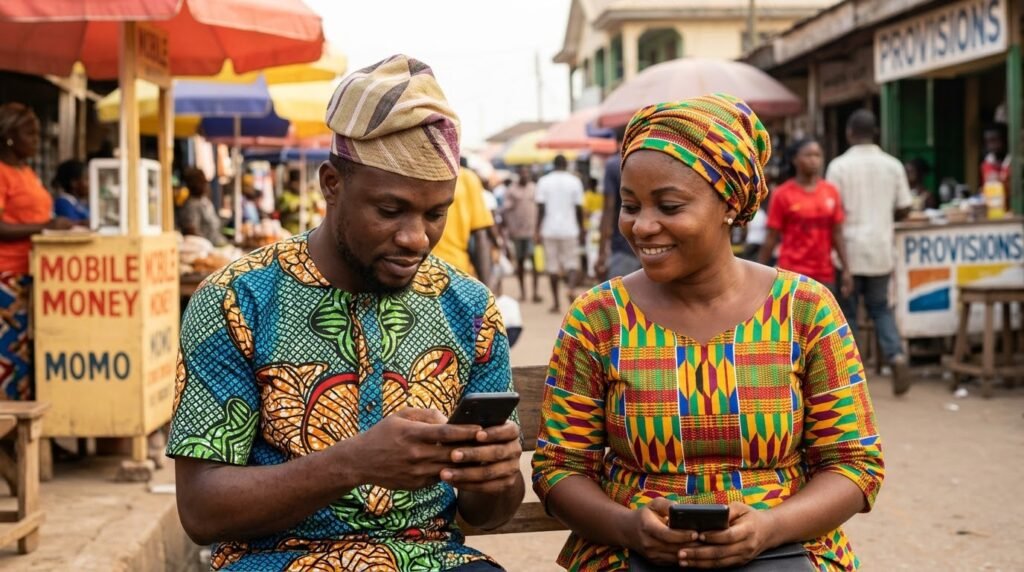
Sending money from Nigeria to Ghana can be more complicated than simply choosing a transfer service and entering an amount. You need to understand which payment methods are available, how exchange rates affect the recipient’s payout, what fees may apply, and which checks can help protect your money. This guide explains how to compare your options, prepare a transfer, avoid common mistakes, and make a more informed decision before paying.
Can You Send Money from Nigeria to Ghana?
Cross-border transfers between Nigeria and Ghana may be possible through eligible financial institutions, authorised payment providers, and regional payment arrangements. However, the availability of a particular method depends on current regulations, the provider’s supported countries, the currencies involved, and the type of transaction.
There is an important distinction between sending money from Nigeria to Ghana and receiving money in Nigeria from Ghana. A service that supports transfers in one direction does not necessarily support the reverse direction.
Before choosing a provider, confirm all of the following:
- It currently supports transfers originating in Nigeria.
- It can deliver funds to a recipient in Ghana.
- It supports your intended funding method and the recipient’s payout method.
- It explains its fees, exchange rate, limits, and expected delivery window before payment.
- It operates under the applicable regulatory requirements for the service being offered.
Do not assume that a mobile wallet, international remittance app, bank transfer service, or regional payment network supports every Nigeria-to-Ghana transaction. Verify the exact route and transaction type before committing your money.
What Are Your Options for Sending Money to Ghana?
The best method depends on why you are sending money, how the recipient needs to receive it, and which services are currently available for your transaction.
| Transfer method | When it may be suitable | What to verify |
|---|---|---|
| Bank-based transfer | Where both the sending institution and receiving bank support the required cross-border payment. | Transfer eligibility, intermediary charges, exchange rate, documentation, and delivery time. |
| Authorised remittance provider | Where a provider explicitly supports transfers from Nigeria to Ghana. | Country eligibility, permitted funding methods, recipient payout options, and total cost. |
| Regional payment service | Where the service supports the relevant countries, currencies, participants, and payment purpose. | Whether individuals or businesses can use it, participating institutions, transaction limits, and settlement conditions. |
| Business payment arrangement | Where a company needs to pay a Ghanaian supplier, contractor, or business partner. | Commercial payment eligibility, invoices, beneficiary details, compliance checks, and payment documentation. |
These are categories of payment methods, not a guarantee that every option is available to every sender in Nigeria. Confirm the actual service and transfer route before registering or paying.
How to Compare Money Transfer Fees and Exchange Rates
The total cost of a transfer usually depends on more than one factor. A provider may charge a separate fee, apply an exchange rate that differs from the market rate, or pass on other charges depending on the payment method.
1. Check the transfer fee
This is the amount charged for processing the transaction. It may be a fixed amount, a percentage of the transfer, or a combination of charges. Check whether the fee is deducted from the amount you enter or charged separately.
2. Check the exchange rate
If you fund the transaction in Nigerian naira (NGN) and the recipient receives Ghanaian cedis (GHS), the exchange rate determines how much the money converts into. A rate that is less favourable to you can reduce the recipient’s payout even when the advertised transfer fee is low.
3. Check for additional charges
Depending on the payment route, additional costs may arise from funding the transfer, intermediary institutions, receiving arrangements, or currency conversion. Ask which charges are included in the quoted amount and which could be deducted later.
4. Compare the recipient’s final payout
The clearest comparison is the amount the recipient is expected to receive after the quoted costs and conversion. Compare offers for the same sending amount, the same payout currency, and a similar delivery method.
Illustrative example: why the final payout matters
Suppose you are comparing two hypothetical services for a transfer funded with ₦100,000. These figures are examples only and are not live exchange rates or real provider quotations.
| Details | Service A | Service B |
|---|---|---|
| Amount funded | ₦100,000 | ₦100,000 |
| Transfer fee | ₦1,000 | ₦500 |
| Illustrative conversion rate | ₦100 per GHS | ₦105 per GHS |
| Amount converted after fee | ₦99,000 | ₦99,500 |
| Illustrative recipient payout | 990 GHS | 947.62 GHS |
In this example, Service A gives the recipient more cedis despite charging a higher transfer fee. The numbers demonstrate the calculation only; they do not represent current NGN-to-GHS rates or actual services.
How to calculate it: If the quoted fee is deducted from the funded amount, divide the remaining amount by the quoted number of naira per cedi. If the provider uses a different fee structure, follow its displayed payout calculation instead.
Step-by-Step: How to Send Money from Nigeria to Ghana
Step 1: Confirm that the transfer is supported
Start by checking whether the service accepts senders located in Nigeria and pays recipients in Ghana. Confirm the required currencies, permitted transaction purpose, and any restrictions that apply to your account.
Step 2: Choose how the recipient will receive the money
Depending on the available service, payout may be made to an eligible bank account or another supported receiving method. Ask your recipient which method they can access and verify that the provider supports it for this specific route.
Step 3: Prepare the correct information
Requirements vary by provider and transaction type. You may need some or all of the following:
- Your verified name and identification details.
- The recipient’s full name, matching the receiving account where required.
- Accurate receiving account or payment details.
- Your contact information and the purpose of the transfer.
- Supporting documentation for larger, commercial, or compliance-sensitive payments.
Enter information carefully. A spelling error, incorrect account detail, or mismatch in the beneficiary’s name can delay a payment or cause it to be rejected.
Step 4: Review the complete quotation
Before authorising payment, check the amount you will pay, the fee, the conversion rate, the final payout in GHS, any possible additional charges, and the estimated delivery window. Check whether the rate is guaranteed for the time you need to complete the transaction or may change before confirmation.
Step 5: Complete the transaction through the verified service
Use the provider’s legitimate app, website, bank channel, or authorised location. Follow its verification requirements and do not share passwords, one-time codes, or account security credentials with another person.
Step 6: Save the receipt and monitor the transfer
Keep the transaction reference, confirmation message, and payment receipt. Share only the necessary transaction information with the intended recipient. If the payment is delayed, contact the provider through its verified customer support channel and quote the reference number.
How Long Does a Nigeria-to-Ghana Transfer Take?
There is no single delivery time for every transfer. Timing depends on the payment method, the provider’s operating process, the recipient’s institution, compliance checks, cut-off times, weekends, public holidays, and whether the transaction requires manual review.
Some eligible payment arrangements may process transactions relatively quickly, while others can take longer. Do not assume that a transfer is instant simply because it was initiated online or through a mobile app.
Before paying, check:
- The estimated delivery window shown for your specific transaction.
- Whether the estimate refers to processing, dispatch, or final receipt.
- Whether additional identity or source-of-funds checks could delay payment.
- What happens if the recipient’s account details are incorrect.
- How to track a pending, failed, or returned transaction.
Can You Send Money from Nigeria to Ghana Using a Mobile App?
A mobile app may be convenient, but the presence of an app does not mean its provider supports transfers from Nigeria to Ghana. Some services support only selected sending countries, receiving countries, currencies, or payment purposes.
Before depositing money or paying a transfer fee, check the supported-country list, account eligibility, identity verification requirements, funding methods, receiving options, and withdrawal conditions. Read the full transaction quotation rather than relying solely on promotional messages.
For a large payment, consider making a small test transfer only if it is permitted, economical, and appropriate for the transaction. A test transfer can help verify the recipient’s details, but it does not guarantee that a larger transfer will face no additional checks.
What About Regional Cross-Border Payment Systems?
Regional payment initiatives can help participating institutions facilitate payments across African countries. However, the existence of a regional network does not automatically mean that every individual or business can initiate a transfer through it.
For any regional payment option, confirm whether your bank or payment provider participates, whether Nigeria-to-Ghana payments are supported, which currencies and transaction types are permitted, and whether the service is available to individuals, businesses, or both.
Also check how the receiving party will obtain the funds, which institution handles the transaction, what charges apply, and what process is available for disputes or failed payments. Rely on the terms supplied for the specific transaction rather than assuming all regional services work the same way.
Common Problems When Sending Money to Ghana
The provider does not support the sending country
A service may advertise international transfers while excluding certain origin countries. Confirm that you can legally and practically initiate the transaction from Nigeria before completing registration or paying any money.
The recipient receives less than expected
This may happen because of the exchange rate, transfer charges, intermediary costs, or deductions under the receiving arrangement. Compare the quoted payout with the final amount and ask the provider to explain any difference.
The transfer is delayed
Verification checks, incorrect beneficiary information, payment processing times, and receiving-institution procedures can affect delivery. Check the status using your transaction reference before attempting to send the same money again.
The payment is rejected or returned
A rejected transaction may involve incorrect details, unsupported payment methods, eligibility restrictions, or compliance requirements. Ask the provider why it failed, whether the funds will be returned, what charges may be retained, and how long the return process may take.
The exchange rate changes before confirmation
Some quotations are time-sensitive. Review the final rate and recipient payout on the confirmation screen. Do not assume that an earlier estimate remains valid if the transaction has not been completed.
How to Avoid Money Transfer Scams
Cross-border payments require careful attention because a completed transfer may be difficult to reverse, especially when money has been sent to the wrong person or to a fraudster.
Security checklist before you pay
- Verify the provider’s identity and applicable authorisation independently.
- Use the provider’s legitimate payment channel rather than a link or app sent by a stranger.
- Confirm the recipient’s identity and account details through a trusted communication method.
- Never disclose your password, PIN, or one-time verification code to someone claiming to help with the transfer.
- Be cautious of people demanding an unexpected release fee, tax payment, or extra deposit to unlock money.
- Do not rely on screenshots as proof that funds have arrived; verify receipt through the actual account or provider.
- Keep receipts, transaction references, and relevant communications.
- Be wary of guaranteed exchange rates or unusually attractive offers that cannot be verified.
If you suspect fraud, contact the provider and your financial institution immediately through verified channels. Preserve evidence and report the incident to the relevant authorities. Do not send additional money simply because someone promises to recover a previous payment.
Sending Money for Family Support vs. Business Payments
The reason for a transfer can affect which payment options are suitable and which documents may be required. Personal support and commercial payments should not automatically be treated as interchangeable transactions.
Family and personal transfers
For money sent to family or friends, prioritise recipient verification, a clear payout quotation, reasonable total costs, and a method the recipient can access. Check any limits or restrictions that apply to personal transfers.
Payments to Ghanaian businesses
For supplier invoices, contractor payments, or other commercial transactions, confirm that the payment method supports business transfers. Keep the invoice, contract, payment confirmation, and any supporting records required for accounting or compliance purposes.
Do not describe a commercial payment as a personal transfer merely to bypass a provider’s rules. Choose a method that supports the actual purpose of the transaction.
How to Choose the Best Transfer Option for Your Needs
The best service is not necessarily the one with the lowest advertised fee or the fastest promotional claim. It is the eligible, trustworthy option that provides the right payout method, clear pricing, suitable delivery timing, and an acceptable process for resolving problems.
| Your priority | What to compare |
|---|---|
| Lowest overall cost | Total amount paid versus the final GHS payout, including applicable fees and conversion costs. |
| Faster delivery | The estimated time for your exact payment route and the conditions that could delay it. |
| Convenient receiving | Whether the recipient can use the supported bank account or other payout method. |
| Business payments | Commercial transfer eligibility, supporting documents, limits, and transaction records. |
| Greater confidence | Provider legitimacy, transparent pricing, account security, and accessible customer support. |
Frequently Asked Questions
1. What is the best way to send money from Nigeria to Ghana?
The best option depends on current service availability, your funding method, the recipient’s preferred payout method, and the total cost. Compare eligible bank-based, remittance, and regional payment options using the final amount the recipient will receive.
2. Can I send Nigerian naira and have the recipient receive Ghanaian cedis?
That depends on the provider and supported payment route. Confirm whether the service accepts NGN funding and pays out in GHS, and check the conversion rate and recipient payout before confirming the transaction.
3. How much does it cost to send money from Nigeria to Ghana?
There is no universal fee. The cost can depend on the provider, amount, funding method, exchange rate, receiving method, and other applicable charges. Obtain a current quotation for your exact transaction before paying.
4. Can I transfer money directly to a Ghanaian bank account?
Some eligible payment routes may support bank-account payouts, but availability varies. Confirm that the provider supports transfers from Nigeria to the recipient’s Ghanaian bank and verify the required beneficiary details.
5. How long will it take for the money to arrive?
Delivery time depends on the payment service, route, processing hours, recipient institution, and verification requirements. Check the estimated delivery window for the specific transaction and retain its reference number.
6. Can I use a money transfer app from Nigeria?
Only if the app supports senders in Nigeria and the specific transfer to Ghana. Check the supported countries, verification rules, funding methods, payout options, and fees before depositing funds.
7. What should I do if the recipient does not receive the money?
Check the transaction status and recipient details, then contact the provider through its verified support channel. Provide the transaction reference and ask whether the transfer is pending, rejected, returned, or under review. Avoid sending a duplicate payment until the status is clear.
8. Is a regional African payment network available for every transfer?
No. Availability depends on participating institutions, supported countries and currencies, transaction type, and service rules. Verify the exact Nigeria-to-Ghana route and your eligibility before relying on a regional payment option.
9. Is the lowest transfer fee always the best deal?
No. A lower fee can be offset by a less favourable exchange rate or other costs. Compare the total amount you pay with the final payout in Ghanaian cedis.
10. Can I send money to Ghana for a business transaction?
Possibly, where the provider supports commercial payments and your transaction meets its requirements. Confirm business-payment eligibility and retain the relevant invoice, contract, and transaction records.
Final Thoughts
Sending money from Nigeria to Ghana becomes easier to evaluate when you focus on the details that affect the actual transaction: eligibility, total cost, exchange rate, recipient payout, delivery time, and security.
Start by confirming that the provider supports the exact route. Compare the final amount in Ghanaian cedis, check the receiving method, verify the provider, and review all transaction details before authorising payment. Keep your receipt and transaction reference in case you need assistance.
Most importantly, never rely on an advertised fee, exchange rate, or delivery promise without checking the current terms for your own transaction. Careful comparison can help you make a better-informed decision and reduce avoidable payment mistakes.
Make Smarter Money Decisions
Digital Software Guide helps readers understand digital services, financial tools, and practical ways to compare their options. Before committing to a money transfer, take time to check the costs, confirm eligibility, and protect your payment details.