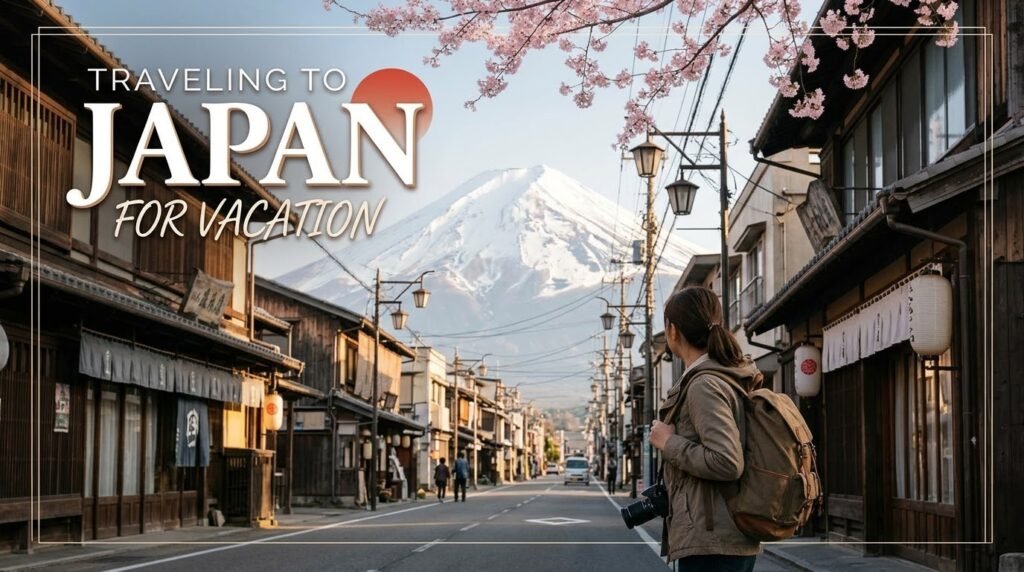
Traveling to Japan for vacation can combine modern city life, historic temples, beautiful landscapes, distinctive food and efficient public transport in one memorable trip. Whether you want to explore Tokyo, discover Kyoto’s traditional streets, enjoy Osaka’s food culture or see Japan’s natural scenery, thoughtful planning can help you make the most of your time and budget.
This guide covers when to visit, how to choose destinations, transport and accommodation, budgeting, mobile connectivity, cultural etiquette and common mistakes to avoid before departure.
1. Decide what you want from your Japan vacation
Japan offers very different experiences depending on where you go. Before booking anything, identify the activities and places that matter most to you.
- Tokyo for modern city experiences: Explore shopping districts, museums, food experiences, entertainment areas and neighborhoods with very different atmospheres.
- Kyoto for traditional culture: Discover temples, shrines, gardens, historic streets and cultural experiences.
- Osaka for food and urban exploration: Enjoy its food culture, shopping and lively city atmosphere.
- Hakone for scenery and relaxation: Consider hot springs, mountain landscapes and possible views of Mount Fuji when weather permits.
- Hokkaido for winter experiences: Depending on the season and location, explore snowy landscapes, winter activities and regional food.
- Okinawa for island scenery: Experience coastal landscapes, beaches and a distinctive regional culture.
You do not need to visit every region on your first trip. Two or three well-chosen destinations may provide a more enjoyable experience than constantly packing, checking out and travelling to the next city.
2. Choose the right time to visit
The best time to travel depends on your interests, preferred weather, budget and tolerance for crowds. Each season offers different experiences, and conditions vary across Japan.
| Season | What to consider |
|---|---|
| Spring | Cherry blossoms can be a highlight, but flowering dates vary by region and year. Popular viewing areas may be crowded, and accommodation demand can be high. |
| Summer | Many areas experience heat and humidity. Rainy-season conditions and typhoons may affect travel at certain times and in particular regions. |
| Autumn | Cooler weather and autumn foliage can make sightseeing appealing, although popular viewing spots can become busy. |
| Winter | Some regions offer snow, winter sports and seasonal illuminations. Other parts of Japan are milder, so clothing and activities should match your destination. |
Check Japanese public holidays and major events before finalizing your dates. Domestic travel demand can increase around holiday periods, affecting availability and crowd levels. Keep some flexibility in your itinerary because seasonal attractions and weather conditions are not guaranteed.
3. Check entry requirements before booking
Japan’s entry requirements depend on your nationality, passport, purpose of travel and length of stay. Requirements that apply to one traveller may not apply to another.
Before committing to non-refundable bookings:
- Confirm whether your passport requires a visa and identify the correct application process.
- Check passport validity and supporting-document requirements.
- Review any applicable requirements concerning accommodation, return or onward travel and evidence of funds.
- Check customs rules for medicines, food, cash and other items you intend to carry.
- Review transit requirements for any country where you change planes.
- Check current arrival procedures and travel advisories close to departure.
Apply for any required visa early enough to accommodate processing delays. A purchased ticket does not guarantee a visa or admission. Use official Japanese government or embassy guidance applicable to your nationality rather than relying exclusively on old articles or social media posts.
4. Plan a realistic itinerary
A common planning mistake is trying to visit too many cities in too few days. Even with efficient transport, changing cities takes time, and large stations, luggage handling and accommodation check-in can use up much of a day.
Example itinerary for seven days
This is an example, not a fixed itinerary for every flight schedule. For a shorter trip, consider staying in one city or exploring nearby destinations. With two weeks, you may have more time to add another region without rushing every day.
5. Understand transport before choosing accommodation
Japan has extensive rail, subway, bus and local transport networks. The right choice depends on your route, how often you travel and where you plan to stay.
- City transport: Trains, subways and buses can be practical for urban sightseeing. Check routes and the last departure when planning evening activities.
- Long-distance rail: Rail can be convenient between major cities, particularly when stations are close to your accommodation and attractions.
- Domestic flights: For some longer routes, compare flying with rail after accounting for airport transfers, baggage and check-in time.
- Rail passes: Compare the pass price with the individual journeys you expect to take. Check coverage, validity, reservation rules and exclusions.
- Airport transfers: Confirm which airport your flight uses, how you will reach your accommodation and how long the transfer may take.
- Luggage: Check luggage rules for your chosen transport and plan for carrying bags through stations and between accommodation stops.
Do not assume that every pass covers every service or that every train seat is available without a reservation. Check the rules for your particular route and travel date before purchasing tickets.
Find Flight Options for Your Japan Vacation
Compare available flights and travel dates for your journey to Japan. Consider total journey time, connections, baggage conditions and arrival airport before making your decision.
Compare Flights to Japan6. Choose accommodation around your plans
A low nightly rate is not always the best value if the property is far from your planned activities or transport connections. Compare the full cost and practical convenience before booking.
- Check walking distance to the station or transport stop you will use.
- Compare the total stay price, including taxes and additional fees.
- Review room size, bed arrangements, bathroom facilities and luggage space.
- Check check-in and check-out times, cancellation terms and reception arrangements.
- Read recent guest feedback about cleanliness, noise, access and service.
- Confirm whether meals, laundry, luggage storage or other useful services are included.
For a multi-city vacation, consider whether moving hotels is worth the time and effort. A convenient base with suitable transport may be more useful than changing accommodation every night.
7. Build a realistic Japan vacation budget
Your total cost depends on your departure country, travel dates, exchange rate, accommodation, food choices, activities and the number of intercity journeys. Treat online estimates as starting points rather than guaranteed prices.
| Budget category | What to include |
|---|---|
| International travel | Airfare, baggage charges, seat selection if needed and airport transfers. |
| Accommodation | Every night, taxes, service charges and potential cancellation costs. |
| Transport | Local journeys, intercity travel, airport transfers and luggage-related costs. |
| Food and drinks | Daily meals, snacks, special dining experiences and dietary needs. |
| Activities | Museum tickets, guided tours, cultural experiences and seasonal attractions. |
| Essentials and contingency | Insurance, connectivity, shopping, permitted medication and an emergency reserve. |
Estimate your expenses in the currency you normally use, then allow for exchange-rate changes and foreign transaction fees. If you are travelling from Nigeria or another country where your usual spending currency differs from the yen, check your payment provider’s international fees, overseas withdrawal charges and card limits.
Set a daily spending target and keep emergency funds separate from your planned sightseeing and shopping budget. A reserve can help cover unexpected transport changes, an additional night or other disruptions.
8. Arrange mobile connectivity and payment options
Reliable connectivity can help with station navigation, translation, directions, reservations and contacting accommodation. Compare roaming, travel eSIMs, physical SIM cards and pocket Wi-Fi before departure.
Check phone compatibility, carrier-lock restrictions, data allowances, coverage, activation instructions and hotspot rules before choosing a plan. Download essential maps and save important addresses and reservation details for offline access where possible.
For payments, check which cards work overseas, international transaction fees, withdrawal charges and daily limits. Card acceptance varies, so carry a suitable backup payment method and an appropriate amount of local currency.
Store copies of essential travel documents securely, and avoid keeping every document and payment method in one place.
9. Learn a few cultural and etiquette basics
You do not need to know every local custom before visiting Japan, but being considerate can make your trip smoother.
- Follow local signs: Rules can vary by station, attraction, religious site and accommodation.
- Be considerate on public transport: Keep your voice low, avoid blocking doors and make room for other passengers.
- Respect shoes-off areas: Some homes, traditional accommodation and indoor spaces require shoes to be removed. Follow the host’s instructions.
- Ask before taking photographs: Respect privacy and any photography restrictions at cultural or religious sites.
- Dispose of rubbish thoughtfully: Public bins may not always be available where you expect them. Carry rubbish until you find an appropriate disposal point.
- Check bathing and tattoo policies: Rules vary among hot springs, pools and bathing facilities.
- Learn simple expressions: Polite greetings and thank-you phrases can be helpful, even when using translation tools.
Practices differ between venues and regions. Follow posted guidance and ask respectfully when you are unsure rather than assuming the same rules apply everywhere.
10. Pack for the season and your itinerary
Choose luggage and clothing based on the weather and activities you have planned.
- Comfortable walking shoes that are already broken in.
- Clothing layers suited to expected temperatures.
- A compact rain jacket or umbrella when appropriate for the season.
- Necessary medication in its original packaging, after checking Japan’s current import rules.
- Charging cables, a compatible power adapter and a suitable portable charger.
- Travel insurance details and emergency contact information.
- A practical day bag and a plan for handling luggage on travel days.
- Secure copies of important documents and booking details.
Check your devices’ electrical requirements and plug compatibility before departure. Do not assume that every medicine legally available at home can be brought into Japan. Verify the rules in advance, especially for prescription and controlled medicines.
11. Common mistakes to avoid
- Trying to see too much: Limit major activities each day and group nearby attractions.
- Ignoring entry requirements: Check the rules for your passport before paying for non-refundable bookings.
- Buying transport passes without calculating: Compare your actual planned journeys, coverage and restrictions.
- Overlooking airport location: Confirm which airport you will use and how you will reach it.
- Underestimating peak-season demand: Popular destinations can become busy, so plan essential bookings in advance where appropriate.
- Leaving no room for changes: Weather, fatigue and transport disruptions can affect your schedule.
- Depending on one payment method: Check international fees and prepare a backup option.
- Relying on outdated information: Verify current entry rules, opening hours, transport arrangements and attraction policies before departure.
12. Japan vacation preparation checklist
- Choose your dates and a manageable itinerary.
- Check passport, visa, transit and entry requirements.
- Set a total budget and emergency reserve.
- Compare flights, baggage allowances and ticket conditions.
- Choose accommodation near suitable transport.
- Calculate intercity travel costs and check reservation rules.
- Arrange travel insurance and review exclusions.
- Plan mobile connectivity and payment methods.
- Check medication, customs and electrical requirements.
- Save important addresses, documents and reservation details securely.
- Review weather and transport information before departure.
Frequently asked questions
How many days are enough for a Japan vacation?
Seven days can provide a useful introduction to one or two major destinations. Ten to fourteen days may allow more time for additional regions, day trips and a slower pace. The ideal length depends on your budget, arrival airport and interests.
Is Japan suitable for a first international vacation?
It can be a rewarding first international trip if you prepare carefully. Research entry requirements, transport, accommodation, payments and local etiquette. Allow extra time when navigating large stations or unfamiliar areas.
Is Japan expensive to visit?
Costs vary according to season, accommodation, long-distance travel, dining choices and activities. Build a budget around your own dates and itinerary rather than relying on a single average estimate.
Should I visit Tokyo and Kyoto on the same trip?
They can work well together when you have enough days to account for the journey between them. If your trip is short, spending more time in one region may be more relaxing.
Do I need to learn Japanese before visiting?
Fluency is not necessarily required for a typical tourist visit, but learning a few polite expressions is helpful. Translation apps, saved addresses and offline maps can make navigation easier.
When should I book my Japan vacation?
Start early if you plan to travel during popular seasons, major holidays or special events. The ideal booking window depends on your route, dates, visa requirements and cancellation flexibility. Check current availability and booking conditions before paying.
Final thoughts
A successful Japan vacation starts with a realistic plan. Choose destinations that match your interests, understand entry requirements, compare transport options, budget for the full journey and leave room for unexpected discoveries. You do not need to see everything in one visit; a well-paced itinerary can help you enjoy more without feeling rushed.
Before confirming your arrangements, verify current travel requirements and the conditions attached to every booking. With the essentials organized in advance, you can focus on Japan’s cities, landscapes, food and cultural experiences.
Considering Business-Class or First-Class Flights?
If you want a more premium way to travel to Japan, explore specialist options for business-class and first-class flight bookings. Compare the itinerary, cabin, fare conditions and services carefully before deciding.
Explore Premium Flight OptionsAffiliate disclosure: This article contains affiliate links. If you make a qualifying booking through these links, Digital Software Guide may earn a commission at no additional cost to you. This does not determine the travel options you should choose; always compare prices, conditions and suitability before booking.