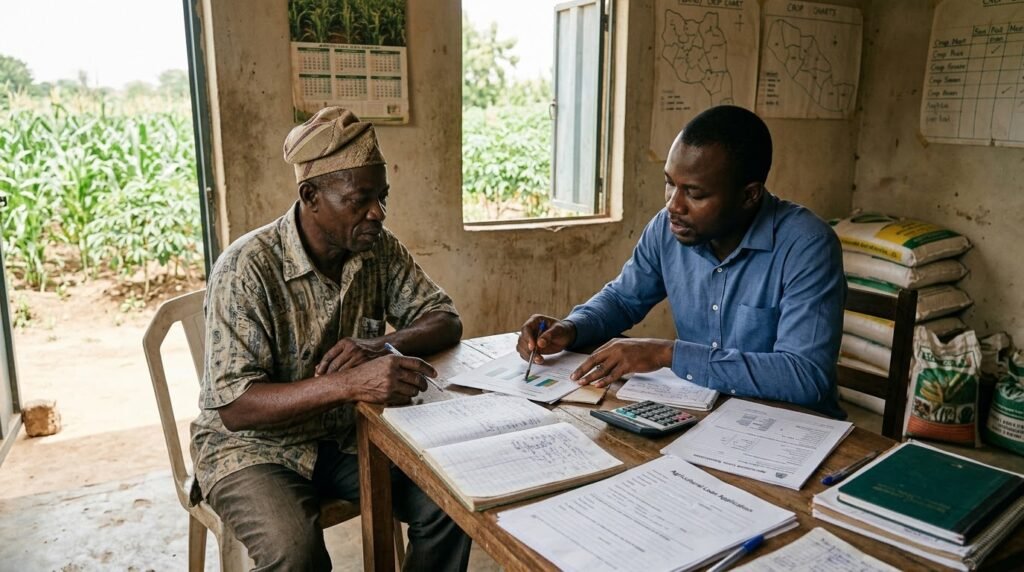
FARMING BUSINESS • AGRICULTURAL FUNDING • NIGERIA
Farmers for the Future (F4F) Grant: Eligibility, Application Preparation and What Nigerian Agripreneurs Should Know
For a young agripreneur, the right funding opportunity can help turn a promising farm idea into a more organised business. But applying successfully takes more than hearing that a grant is available. You need to understand who the programme serves, what the selection process involves, how to present your business and how to avoid misleading application offers.
This guide explains the Farmers for the Future (F4F) Grant associated with the British American Tobacco Nigeria Foundation (BATNF), the programme’s reported benefits and how to prepare for a future application round. It also includes a practical business-plan checklist you can use even if you are not eligible for F4F.
What Is the Farmers for the Future (F4F) Grant?
Farmers for the Future is an agricultural entrepreneurship programme designed to support viable agribusinesses led by young Nigerians. The programme is associated with BATN Foundation and focuses on developing the next generation of agricultural entrepreneurs.
F4F is not simply a general cash giveaway for anyone who farms. Its published programme information describes a structured process involving applications, selection, business development, pitching and support for selected winners.
The opportunity is particularly relevant to young people who are developing a commercial agricultural idea and can explain how that business could operate, serve customers and grow sustainably.
Who Is F4F Designed For?
The programme’s published information identifies currently serving National Youth Service Corps (NYSC) members with viable agribusiness ideas as its target audience. This means that being a farmer, agricultural graduate or young business owner alone should not be treated as proof of eligibility.
Before applying in a future round, confirm the exact requirements in that round’s official application instructions. Check these points carefully:
- NYSC status: Determine whether you must be currently serving and whether a specific amount of service time must remain.
- Business ownership: Confirm who is allowed to submit and participate. Do not assume a friend or team member can apply on the founder’s behalf.
- Agribusiness connection: Be ready to show how your idea fits the programme’s stated agricultural value-chain focus.
- Business stage: Check whether the cohort accepts ideas, early-stage ventures, operating businesses or a defined combination.
- Documents and technology: Review any requirements for identification, internet access, online training, business records and presentations.
- Deadlines and rules: Confirm the current deadline, permitted number of applications and required submission format.
What Funding and Support May Be Available?
The published F4F programme page describes an overall grant pool of ₦10 million for six winners in its advertised competition structure:
| Published prize category | Number of winners | Advertised amount per winner |
|---|---|---|
| First prize | 1 | ₦3,000,000 |
| Second prize | 2 | ₦2,000,000 each |
| Third prize | 3 | ₦1,000,000 each |
| Total | 6 | ₦10,000,000 |
These figures describe the published prize structure, not a promise that every applicant will receive money or that a future cohort will use identical prizes. Verify the terms for the relevant round before making a financial decision.
Programme information has also described business bootcamp training, mentorship, technical support, alumni networking and connections that may help entrepreneurs explore further finance or market opportunities. These benefits depend on the programme’s terms and a participant’s selection and participation; they should not be treated as guaranteed outcomes for every applicant.
How the F4F Selection Process Works
The published programme structure gives applicants a useful idea of the stages they may encounter. The exact process should still be checked for each new cohort.
- Application submission: Applicants submit the information requested through the designated application process.
- Initial screening: Applications are reviewed and a smaller group may be selected for the next stage.
- Business bootcamp: Selected entrepreneurs may receive structured training to refine their business models and explain their plans more clearly.
- Pitching and evaluation: Shortlisted businesses may present their proposals to a judging panel.
- Award and follow-up support: Selected winners may receive the published grant awards and programme support under the applicable terms.
Selection is competitive. Meeting the basic eligibility requirements does not mean that an application will be shortlisted or funded.
Build a More Organised Agribusiness
Funding is only one part of building a sustainable agricultural business. If you also need tools for a business website, customer communication, email marketing or online sales, Systeme.io may be worth evaluating for those business tasks.
Note: Systeme.io is business software, not an agricultural grant provider or a lender. It does not provide F4F funding or guarantee grant approval.
Explore Business ToolsThis is an affiliate link. Digital Software Guide may earn a commission if you register through it, at no additional cost to you.
How to Prepare a Strong Agribusiness Application
A strong application explains a real business problem and shows how the proposed solution can work in practice. Avoid relying only on statements such as “agriculture is profitable” or “I want to help feed Nigeria.” Explain the specific business you intend to build.
1. Describe the problem you are solving
Identify a clear need in your area or market. For example, your business might address inconsistent vegetable supply, high feed costs, post-harvest losses, poor access to reliable farm inputs, limited processing capacity or difficulty connecting producers with buyers.
Use what you have actually observed. Where possible, support the problem with customer conversations, sales records, quotations or a small trial. Do not invent survey results or claim to have customers you have not spoken with.
2. Explain your product or service
State exactly what you will sell or provide. Examples include eggs, catfish, processed cassava, seedlings, vegetables, livestock services, farm-input distribution or a technology-enabled service for agricultural businesses.
Explain who will pay, why they need the product and how you will deliver it. If your idea is still at the planning stage, say so clearly and show what you have done to test whether customers are interested.
3. Identify your customers and competitors
“Everybody who eats food” is not a useful target-market description. A poultry business might sell to nearby households, restaurants, retailers or food distributors. A vegetable producer might supply market traders, hotels or institutional buyers.
Identify your first realistic customer group. Find out what customers currently buy, how often they buy it, what influences their decisions and what alternatives they already have.
4. Prepare a realistic budget
List the costs required to start or expand the business. Separate one-time equipment purchases from recurring operating costs. Include transport, packaging, feed or seed, labour, water, electricity, repairs, marketing and an appropriate allowance for unexpected costs.
| Budget item | What to estimate |
|---|---|
| Production inputs | Seed, feed, fingerlings, chicks, fertiliser or other relevant inputs |
| Equipment and infrastructure | Tools, storage, housing, irrigation or processing equipment |
| Labour and services | Workers, technical support, maintenance and professional services |
| Distribution | Packaging, transport, delivery and market charges |
| Operating reserve | Cash needed to manage delays, losses or unexpected expenses |
Obtain current local quotations where possible. Do not build the entire plan around receiving the maximum advertised grant; your application should show that you understand the business and can adjust the plan to the amount actually available.
5. Show how the business can earn revenue
Explain your pricing, expected sales volume and the costs of producing and delivering each unit. Use conservative estimates and identify what evidence supports them.
For example, if you expect to sell 200 units per month, explain how you reached that figure. Have customers indicated interest? Have you already sold a smaller quantity? Is the market large enough, and can you produce consistently?
6. Explain the use of funds
Connect every major budget item to a business outcome. Instead of writing “I need money to expand,” explain which equipment or inputs you intend to purchase, what capacity they will add, and how you will measure the result.
Make sure the plan is achievable. A smaller, well-explained project can be more credible than an ambitious plan with unsupported sales estimates.
A Simple Agribusiness Budget Example
The following example is hypothetical. It is not an F4F award budget or a prediction of farming returns.
| Planned use | Illustrative amount |
|---|---|
| Production inputs | ₦250,000 |
| Basic equipment | ₦200,000 |
| Packaging and transport | ₦100,000 |
| Operating reserve | ₦100,000 |
| Total planned budget | ₦650,000 |
A useful proposal would explain why each cost is necessary, how the figures were estimated and what happens if prices increase or sales are slower than expected. Replace every example amount with current quotations and the actual needs of your business.
Documents and Information to Prepare
Do not assume that every item below is compulsory for F4F. Use this as a preparation checklist, then compare it with the official instructions for the relevant cohort.
- Valid NYSC identification and any other identity documents specifically requested.
- A concise business summary describing the product, customer and business opportunity.
- A basic business plan and realistic use-of-funds budget.
- Current quotations for important equipment and inputs.
- Evidence of customer interest, pilot sales or existing operations, if available.
- Production, sales and expense records if the business is already operating.
- A clear explanation of the business owner’s role and relevant experience.
- A simple growth plan with measurable targets.
- Access to a reliable email account, phone or computer and internet connection if the application requires them.
Keep digital copies organised in a secure folder. Use clear filenames and make sure your documents are readable before submitting them.
How to Avoid Fake F4F Grant Offers
Grant announcements can be copied, edited or circulated long after an application window closes. Before sharing documents or acting on a message, carry out these checks.
- Verify the organiser: Match the announcement to the current programme information published by BATN Foundation and any implementing partner named for that cohort.
- Check the date: A genuine old announcement can still be misleading when presented as a new opportunity.
- Be cautious about payment demands: Do not send money to an individual promising to secure selection, guarantee a grant or move your application to the top of a list.
- Inspect the application destination: Do not assume a forwarded message or shortened URL is genuine merely because it uses the F4F name or logo.
- Protect sensitive information: Do not share passwords, banking PINs or one-time verification codes. Submit identity documents only through a process you have independently verified.
- Do not trust guaranteed-award claims: A person who promises approval in exchange for a fee is a serious warning sign.
- Keep your own records: Save the announcement, submission confirmation and correspondence. Do not submit multiple applications if the programme rules prohibit it.
What If You Are Not Eligible for F4F?
F4F’s focus on serving NYSC members means that many experienced farmers and established agribusiness owners may not fit the programme’s target group. That does not mean your business has no financing options.
Consider alternatives based on your business stage and needs:
- Buyer agreements: Explore whether reliable buyers can agree on quantities, delivery schedules or other commercial terms before you expand production.
- Supplier terms: Ask reputable suppliers whether they offer documented payment arrangements appropriate for your business.
- Cooperative opportunities: Investigate credible agricultural cooperatives and producer groups operating in your area.
- Other grants and enterprise programmes: Check eligibility, application windows, required contributions and restrictions before investing time in an application.
- Regulated finance providers: Compare the full cost and repayment schedule of any loan. Borrow only when expected cash flow can reasonably support repayment.
- Gradual expansion: Test demand with a manageable production cycle before committing to a larger operation.
Do not assume that an opportunity advertised for another farmer is suitable for you. Check age, location, business stage, sector, registration, ownership and funding conditions individually.
Keep Your Agribusiness Records and Marketing Organised
As your farm business develops, you may need a simple way to present your services, communicate with customers, build an online presence or organise business marketing. Systeme.io is one option to evaluate for those digital business tasks—not for obtaining a grant.
See Tools for Growing a BusinessAffiliate disclosure: Digital Software Guide may earn a commission if you register through this link, at no extra cost to you. Systeme.io is not affiliated with F4F and does not provide F4F grant funding.
Your Agribusiness Readiness Worksheet
Use this worksheet to identify gaps before applying for a grant or approaching a business partner.
- Business name or working name: ______________________________
- Product or service: __________________________________________
- Target customers: __________________________________________
- Problem customers need solved: _______________________________
- Evidence of demand: _________________________________________
- Estimated start-up or expansion cost: __________________________
- Most important three expenses: ________________________________
- Expected sales and how they were estimated: ____________________
- Main operational risk and mitigation: __________________________
- First measurable target for the next 90 days: ___________________
Complete the worksheet with realistic figures. Where you do not know an answer, identify the information you need to collect rather than guessing.
Frequently Asked Questions
Is the Farmers for the Future grant currently open?
The 2026 Cohort 7 application deadline was reported as 22 June 2026, which has passed. I could not verify a new application window as of 19 October 2026. Check the organiser’s current announcement before taking action.
Who is the F4F grant intended for?
The published programme information targets currently serving NYSC members with viable agribusiness ideas. The exact requirements should be checked against the rules for the specific cohort.
How much funding does F4F offer?
The published prize structure for the advertised competition totals ₦10 million across six winners: one first-prize award of ₦3 million, two second-prize awards of ₦2 million each and three third-prize awards of ₦1 million each. Future rounds may change, so confirm the current terms.
Does every eligible applicant receive money?
No. The programme is competitive, and eligibility alone does not guarantee shortlisting, selection or an award.
Must my agribusiness already be registered?
Do not assume that registration rules are identical across cohorts. Check the current application instructions and prepare accurate ownership and business information.
Can an established farmer who is not serving in NYSC apply?
The published F4F information identifies serving NYSC members as its target group. If you are not serving, check the rules carefully rather than assuming you qualify. Other agricultural enterprise programmes may suit your circumstances better.
Should I pay someone to guarantee selection?
No. Avoid anyone who promises a guaranteed award or asks for unofficial payment to secure selection. Verify all application instructions independently.
Final Checklist Before You Apply
- Confirm that a new application window has actually been announced.
- Read the current eligibility criteria and all submission instructions.
- Prepare a specific, evidence-based agribusiness proposal.
- Use realistic figures supported by quotations and business records.
- Explain how the proposed funding would be used and measured.
- Review every field and attachment before final submission.
- Keep a copy of your application and confirmation.
- Reject guaranteed-award promises and unverified payment requests.
Conclusion
The Farmers for the Future Grant is a structured agribusiness development opportunity aimed at supporting young Nigerian entrepreneurs, particularly serving NYSC members with viable agricultural businesses. Its published model combines competitive grant awards with business development and mentorship support.
The best preparation starts before an application window opens: understand your customer, test demand, keep accurate records, calculate costs carefully and develop a realistic plan. Since the reported 2026 deadline has passed, verify any future announcement before submitting personal information or relying on expected funding.
Editorial note: This guide is for general educational purposes. Programme rules, award amounts, deadlines and eligibility conditions can change. Always verify the applicable terms before making decisions.
Affiliate disclosure: This article contains affiliate links to Systeme.io. If you register through one of these links, Digital Software Guide may earn a commission at no additional cost to you. Systeme.io is a business software platform, not a grant provider, lender or F4F programme partner.