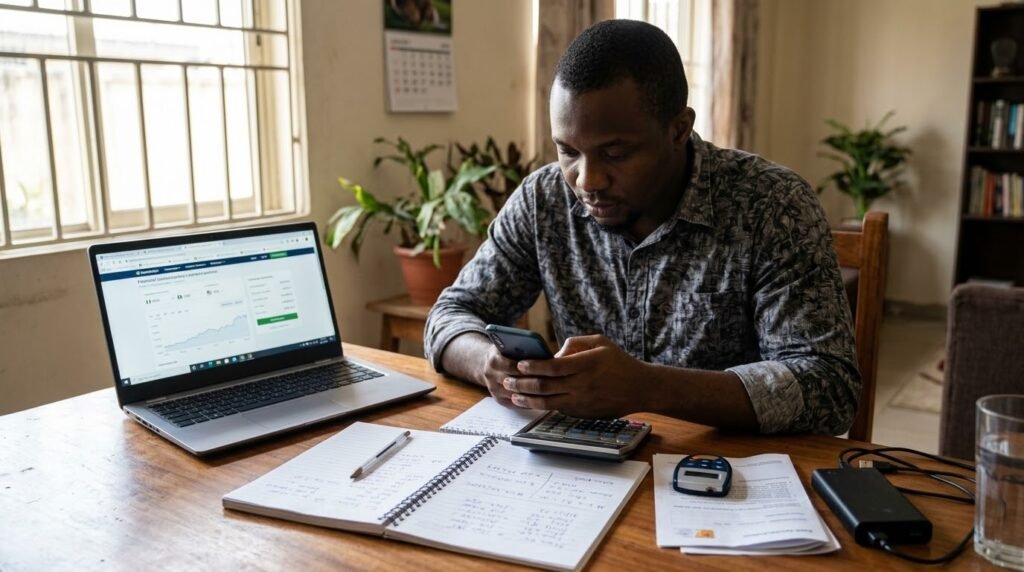
Sending money from Nigeria to the United States requires more than finding an app with an attractive exchange rate. You need a transfer service that supports the direction of payment, accepts your location and payment method, permits your intended transaction, and explains how much the recipient will actually receive.
This guide explains how to assess your options, compare the real cost of an international transfer, prepare the information you may need, and avoid common mistakes. It is designed for people researching personal payments, family support, education-related expenses, or legitimate business transactions.
Can You Send Money from Nigeria to the USA?
Yes, outbound international payment routes may be available through certain providers and banks, depending on the transfer purpose, your eligibility, the recipient’s account, the funding method, and applicable regulations. However, not every remittance company or mobile money app supports transfers in both directions.
Some providers advertise Nigeria-to-United States bank transfers. Grey and Pesa, for example, have advertised services for this route. Treat those listings as starting points for your research, not as a guarantee that a transfer will be available to every Nigerian customer today. Confirm current eligibility, terms, payment limits, fees and delivery estimates directly inside the provider’s official service.
If an app only describes receiving international payments or collecting money from people abroad, do not assume it can send funds from a Nigerian account to a US bank account. Check the actual sending and receiving countries shown during the transfer setup.
What Are Your Main Transfer Options?
1. A digital international transfer provider
Some financial technology companies provide online transfers from a Nigerian naira balance to a recipient’s US-dollar bank account. Depending on the provider, the process may be completed through a mobile app or website without visiting a physical branch.
Before opening an account or depositing money, confirm:
- Nigeria is currently supported as the sending country.
- The provider can pay a beneficiary in the United States.
- Your account type, identity documents and intended payment are eligible.
- The service explains the exchange rate, fees and final recipient amount before confirmation.
- You understand how to fund the transfer and what happens if a payment is delayed or rejected.
2. A Nigerian bank and an international bank transfer
Your bank may be able to explain the appropriate international payment process for your particular purpose. International bank transfers can involve a beneficiary bank, intermediary institutions, documentation and foreign-exchange requirements.
Ask your bank which payment method is appropriate, what documents are required, which currencies can be used, what charges may apply, and whether intermediary or receiving-bank deductions are possible. Do not assume every Nigerian bank account supports every kind of outbound transfer.
3. A payment route designed for a specific legitimate purpose
Payments for eligible education, medical, business or other documented purposes may have different requirements from a general person-to-person transfer. The correct route depends on the nature of the payment and the rules that apply to it.
Explain the true purpose to your bank or provider. If documentation is required, obtain the exact checklist from the institution handling the payment before committing funds.
How to Compare Money Transfer Costs
A transfer advertised as having a low fee is not necessarily the cheapest option. The exchange rate and any deductions can make a meaningful difference to the amount received.
Compare these four components before deciding:
| Cost component | What to check |
|---|---|
| Transfer fee | The amount charged to initiate or process the payment. |
| Exchange rate | The NGN-to-USD rate offered for your exact transaction. |
| Other deductions | Possible funding, intermediary, receiving-bank or other disclosed charges. |
| Amount received | The final USD amount expected to reach the recipient after applicable charges. |
A simple example of comparing two offers
Imagine two hypothetical services are available for the same eligible transfer. These figures are for illustration only; they are not current market rates or quotes from real providers.
| Illustrative detail | Offer A | Offer B |
|---|---|---|
| Amount paid | ₦500,000 | ₦500,000 |
| Example exchange rate | ₦1,500 per USD | ₦1,480 per USD |
| USD before fees | $333.33 | $337.84 |
| Illustrative fee | $3.00 | $8.00 |
| Approximate amount after fee | $330.33 | $329.84 |
In this illustration, Offer A produces a slightly higher amount after the stated fee, even though Offer B initially converts more naira into dollars. The actual outcome depends on the provider’s quote and any additional deductions.
When comparing real offers, enter the same sending amount and compare the final amount the recipient will receive. Do not compare one provider’s advertised exchange rate with another provider’s rate from a different time.
What Information Might You Need?
Requirements vary by institution, transfer size, payment purpose and customer status. Depending on the service, you may be asked for some of the following information:
- Your legal name and contact details.
- Identity verification documents and other required customer checks.
- A supported method of funding the transfer.
- The recipient’s legal name as held by their bank.
- The recipient’s US bank account details and any routing information requested by the provider.
- The reason for the payment and supporting documents, if required.
- Additional verification information for a transaction that triggers further review.
Ask the provider for its exact requirements. Never send identity documents or sensitive banking details through an unsolicited social media account or to an unverified individual claiming to be an agent.
Step-by-Step: How to Prepare a Transfer
- Identify the purpose. Decide whether the payment is personal support, an eligible education or medical payment, a business transaction, or another legitimate purpose.
- Find an appropriate provider. Check the institution’s current terms and verify that it supports outbound transfers from Nigeria to the United States for your intended use.
- Complete the eligibility checks. Confirm your location, identity requirements, account type, payment method and applicable transaction limits.
- Enter the beneficiary information carefully. Confirm the recipient’s name and bank details directly with the intended recipient using a trusted communication channel.
- Review the quote. Check the amount being debited, exchange rate, all disclosed fees, expected USD amount and estimated delivery time.
- Confirm only when the details are correct. Read the provider’s terms and cancellation or refund conditions before authorizing payment.
- Keep the receipt and tracking reference. Use the official provider’s tracking or support process if the payment is delayed or the beneficiary cannot confirm receipt.
How Long Does a Nigeria-to-USA Transfer Take?
There is no single delivery time that applies to every transfer. A provider may advertise same-day, near-instant or one-to-two-business-day delivery for a particular service, but that estimate may depend on when the transfer is funded, identity verification, bank processing hours, weekends, holidays and compliance reviews.
Ask whether the displayed estimate refers to processing time, dispatch time or the point at which funds should be available in the recipient’s account. A payment that needs additional checks may take longer than the initial estimate.
Common Reasons a Transfer May Fail or Be Delayed
- Unsupported direction: The service accepts transfers into Nigeria but not from Nigeria.
- Incomplete verification: The provider needs additional identity or transaction information.
- Incorrect beneficiary details: The account name, account number or routing information does not match the receiving bank’s requirements.
- Payment restrictions: The purpose, amount, account type or funding source does not meet the provider’s rules.
- Bank or compliance review: The transaction requires additional checks before processing.
- Funding problems: The payment source is unsupported, the debit fails or the available balance is insufficient.
If a transfer fails, contact the institution through its official support channel. Ask whether the payment was rejected, is still processing or has been returned, and whether any fees will be refunded. Do not immediately repeat a large payment until you understand what happened to the original transaction.
How to Avoid Money Transfer Scams
International payments can attract impersonation, fake support accounts and pressure tactics. Use the following safeguards before sending money.
- Use the provider’s verified official app or website, not a link sent by an unknown person.
- Check the institution’s authorization and regulatory status where applicable.
- Never share your password, one-time verification code, card PIN or account recovery credentials.
- Do not pay an individual an unofficial “release fee” to unlock a transfer.
- Be suspicious of guaranteed exchange rates, unusually urgent demands or promises that bypass normal checks.
- Verify any unexpected change in beneficiary bank details using a separate trusted channel.
- Keep transaction receipts, provider communications and complaint reference numbers.
Pre-Transfer Checklist
- ☐ The service currently supports transfers from Nigeria to the USA.
- ☐ My payment purpose and account meet the provider’s requirements.
- ☐ I have checked the institution’s authorization and reputation.
- ☐ The recipient’s details have been independently confirmed.
- ☐ I understand the exchange rate, transfer fee and any other disclosed charges.
- ☐ I have checked the final amount the recipient should receive.
- ☐ I understand the estimated delivery time and refund process.
- ☐ I know how to contact official support and retain the receipt.
Frequently Asked Questions
Can I send money directly from my Nigerian bank account to a US bank account?
It depends on your bank, the payment purpose, the receiving bank and applicable foreign-exchange and payment rules. Ask your bank which outbound international payment options are currently available and what documents they require.
Can I use any money transfer app?
No. A service may only support transfers from selected countries or may only support money being sent into Nigeria. Confirm the exact Nigeria-to-USA route before creating an account or depositing funds.
Which transfer service is cheapest?
There is no reliable universal winner. Rates, fees, limits and eligibility can vary. Compare the final amount delivered for the same sending amount at the same time, and include any charges that may be deducted outside the displayed transfer fee.
Can I send money to a US recipient who does not have the same app?
Some providers pay directly into eligible bank accounts, while others require a particular account or payout method. Check the receiving options and beneficiary requirements before starting the transfer.
Is a zero-fee transfer always the best option?
No. A provider may charge no separate transfer fee but offer a less favourable exchange rate or have other applicable costs. Compare the complete transaction and the final amount received.
What should I do if the money does not arrive?
Check the transaction status and expected delivery window. Contact the provider using its official support channel, provide the transaction reference, and ask for a trace or investigation. Avoid sending a duplicate payment until the status of the original is clear.
Final Thoughts
Sending money from Nigeria to the USA starts with choosing a payment route that genuinely supports your location, recipient and intended purpose. The safest choice is not necessarily the provider with the most attractive headline rate; it is the option whose eligibility requirements, total cost, delivery expectations and support process you understand before committing funds.
Confirm the current rules and provider terms, compare the amount the recipient will receive, check every beneficiary detail, and retain your receipt. These steps help you make a more informed decision without relying on outdated rates or assumptions about international transfer availability.
Editorial note: This article is for general financial education. It does not guarantee that a particular service, transfer route or payment purpose will be available to every reader. Provider terms, fees, exchange rates and regulations can change. Confirm current details with the relevant financial institution before sending money.