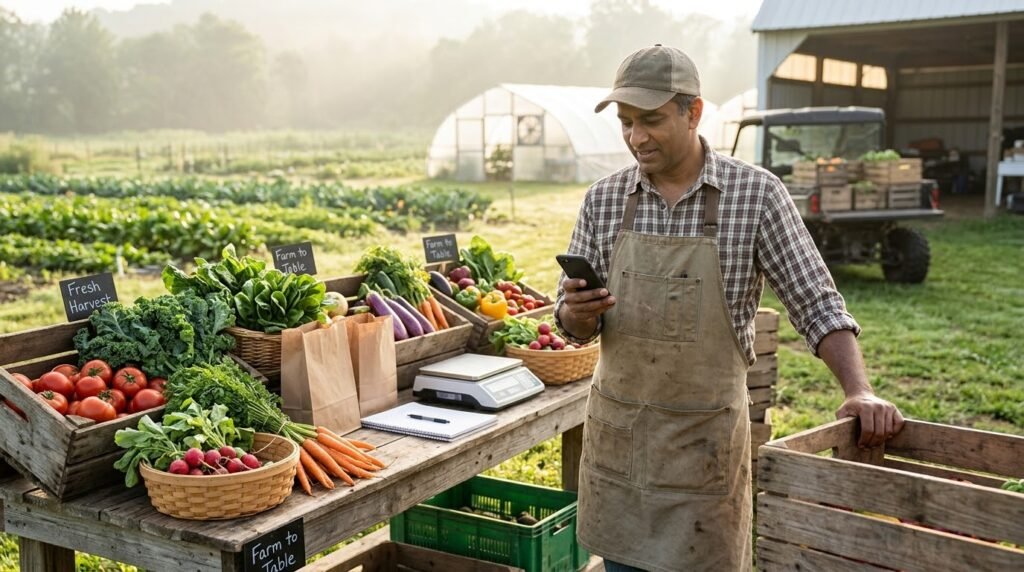
How Farmers Can Sell Farm Products Online and Find More Customers
Farmers produce food and other valuable agricultural products, but finding reliable customers can be just as challenging as growing, raising, or harvesting them. Depending only on passing buyers, local markets, or word of mouth may limit a farm’s reach. Selling farm products online gives farmers another way to showcase what they offer, answer customer questions, and build relationships with potential buyers.
You do not need a complicated technology setup to begin. A clear product list, good photographs, reliable contact details, and a simple way for customers to enquire or place orders can provide a practical starting point.
This guide explains how to establish an online presence for a farm, choose useful digital tools, promote agricultural products, and develop a more organized process for handling customer enquiries and sales.
Build an Online Presence for Your Farm Business
Want a practical way to present your farm products online? Systeme.io provides tools for creating landing pages, collecting customer enquiries, and building marketing follow-up processes. It is an online business and marketing platform, not dedicated farm-management software.
- Create a page introducing your farm and products.
- Give potential customers a clear way to contact you.
- Organize enquiries and develop a follow-up process.
1. Decide Which Farm Products You Want to Sell Online
Before creating a website or promoting products, decide exactly what your farm can offer. A focused product list makes it easier for customers to understand what is available and helps you plan production, packaging, pricing, and delivery.
Depending on your operation, you might sell:
- Fresh produce: Vegetables, fruits, herbs, and other harvested crops.
- Livestock and poultry products: Eggs, poultry, fish, or other products that can legally be sold and handled under applicable requirements.
- Processed farm products: Properly packaged and compliant products such as flour, dried produce, spices, or other food items.
- Seeds and planting materials: Products offered in accordance with applicable agricultural and trade regulations.
- Bulk agricultural supplies: Products intended for retailers, restaurants, processors, or other businesses.
Choose products you can supply consistently and describe accurately. For perishable products, make sure you understand storage, handling, packaging, and delivery requirements before accepting orders.
2. Identify Your Ideal Customers
Not every customer wants the same product, quantity, delivery arrangement, or price. Understanding your likely buyers helps you decide what information to publish and where to promote your farm.
Households
May want convenient access to fresh produce, eggs, or other farm products in manageable quantities.
Restaurants and caterers
May need consistent quantities, predictable supply, clear prices, and dependable delivery arrangements.
Retailers and market traders
May be interested in bulk quantities, wholesale prices, availability, and repeat purchasing.
Food processors
May need specific product varieties, quality standards, quantities, and delivery schedules.
Start with one or two customer groups you can serve well. Your online message should explain which products you supply, where you operate, the quantities available, and how interested buyers can reach you.
3. Create a Simple Online Home for Your Farm
A farm business needs a clear digital destination where potential customers can learn about the operation and find current product information. This could be a website, a dedicated landing page, or another suitable online business profile.
A useful farm business page should include:
- Farm introduction: Explain who you are, what you produce, and where you operate.
- Product catalogue: List available products, sizes, grades, or packaging options where relevant.
- Clear photographs: Use genuine, recent images of your farm and products.
- Contact information: Provide a reliable way to ask questions or request a quotation.
- Ordering instructions: Explain how customers can confirm availability, agree on quantities, and place orders.
- Delivery or collection details: State the areas you serve and how delivery or pickup is arranged.
Keep the page easy to use on mobile phones. Customers should not have to search through several screens to understand what you sell or how to contact you.
4. Use Digital Tools That Solve Real Business Problems
Farming businesses may benefit from several types of software. The right choice depends on whether you need to manage production, track finances, record stock, communicate with customers, or promote products.
Farm-management software
Specialized farm-management tools can help with activities such as crop planning, livestock records, field operations, input tracking, and production reporting. Choose a system that fits your farming method, operation size, device access, and budget.
Inventory and bookkeeping tools
Spreadsheets or suitable business software can help track product quantities, sales, expenses, payments, and stock changes. Accurate records make it easier to understand which products are selling and whether prices cover costs.
Website and landing-page builders
These tools can help farmers present their products online without building every page from scratch. They may support product information, enquiry forms, campaign pages, and other customer-facing features.
Email marketing and customer follow-up tools
Where customers have agreed to receive communications, marketing tools can help share availability updates, seasonal offers, farm news, and reorder reminders. Respect privacy requirements and provide an appropriate way for recipients to unsubscribe.
Messaging and customer service tools
Depending on customer preferences, a business may use email, telephone, or supported messaging services to answer enquiries and confirm orders. Keep clear records of agreed quantities, prices, payment status, and delivery arrangements.
5. Create a Product Page That Answers Customer Questions
Customers are more likely to enquire when a product listing gives them the information needed to make a decision. Avoid descriptions that simply say “fresh products available” without explaining what is being offered.
For each product, try to include:
- Product name and a clear photograph.
- Available size, grade, weight, or packaging unit.
- Current price or a clear quotation process.
- Availability and any seasonal limitations.
- Minimum order quantity, where applicable.
- Collection, delivery, or shipping arrangements.
- A contact method for questions and orders.
Keep information current. If a product sells out, update its availability so that customers do not place orders based on outdated listings.
6. Make It Easy for Customers to Enquire and Order
A digital product page is more useful when it leads to a clear next step. Depending on your business, that step could be requesting a quotation, asking about stock, arranging a pickup, or placing an order.
You can begin with a simple enquiry process:
- The customer views the product and its details.
- The customer submits an enquiry or contacts the farm.
- You confirm availability, quantity, price, and delivery arrangements.
- Both sides agree on payment and fulfilment terms.
- You record the order and follow up after fulfilment where appropriate.
An enquiry form can collect a customer’s name, contact details, requested product, approximate quantity, and preferred delivery or collection arrangement. Collect only the information needed for the transaction and protect the details you receive.
For businesses receiving many enquiries, a simple customer record or suitable customer relationship management tool can help prevent missed messages and make follow-ups more consistent.
7. Promote Your Farm Products Online
Publishing a page is only the beginning. Potential customers must still discover it. Choose promotion methods that suit your target audience, available time, products, and delivery area.
Share useful farm content
Publish authentic photographs and short videos showing your products, harvesting activities, packaging process, or seasonal availability. Useful content helps people understand what you offer and can give them a reason to enquire.
Use social media thoughtfully
Choose platforms where your potential buyers are active. Share product availability, explain how ordering works, answer questions, and direct interested customers to your main product page or enquiry channel.
Build local business relationships
Restaurants, retailers, caterers, food processors, and market traders may be useful prospects for suitable farm products. Contact relevant businesses professionally and provide clear product, pricing, quantity, and supply information.
Publish helpful website content
Articles about your products, seasonal availability, storage, sourcing, or farming practices can answer customer questions and improve your website’s usefulness. Write accurately and avoid unsupported claims about product quality, health benefits, or production methods.
Encourage repeat orders
Where appropriate, let existing customers know when products become available again. Keep communication useful and respectful, and obtain permission before sending marketing messages where required.
8. Price Products and Plan Fulfilment Carefully
Online interest does not automatically translate into a profitable sale. Your pricing and fulfilment process should account for the actual costs of producing, preparing, selling, and delivering each order.
Depending on your business, relevant costs may include:
- Seeds, feed, fertilizer, or other production inputs.
- Labour, equipment, utilities, and farm operating expenses.
- Packaging, storage, and handling.
- Transport, delivery, or shipping charges.
- Payment-processing or platform fees.
- Losses, spoilage, or unsold inventory.
Before confirming an order, make sure you can meet the quantity, quality, timing, and delivery terms you have agreed to. For perishable goods, use appropriate storage, transport, and food-safety practices. Requirements depend on the product and location.
9. Measure Results and Improve Your Process
You do not need a complicated analytics system to begin learning from your online sales activity. Start by recording a few useful measures consistently.
- How many enquiries arrive each week?
- Which products attract the most interest?
- How many enquiries become confirmed orders?
- Which marketing channels generate relevant customers?
- How often do customers order again?
- Which products provide a reasonable return after costs?
Use what you learn to improve product descriptions, adjust your promotion efforts, identify customer needs, and refine your ordering process. Review results over a meaningful period rather than making decisions based on a single day’s activity.
10. A Simple 30-Day Starting Plan
Week 1: Prepare
- Choose your initial products and target customers.
- Gather accurate product information and photographs.
- Calculate costs and establish clear pricing or quotation rules.
Week 2: Build
- Create a simple online farm profile or landing page.
- Add product details, contact information, and ordering instructions.
- Test the page and enquiry process on a mobile phone.
Week 3: Promote
- Share useful product content on suitable channels.
- Contact relevant local buyers or business customers.
- Respond promptly and record customer questions.
Week 4: Review
- Review enquiries, confirmed orders, and associated costs.
- Improve unclear product information or ordering steps.
- Decide which activities deserve more attention next month.
This is a starting framework, not a guarantee of sales. Adjust the timeline to your growing season, product availability, internet access, and business resources.
Frequently Asked Questions
Can small-scale farmers sell products online?
Yes. A small farm can begin with a simple product page, accurate photographs, clear contact details, and a reliable way to confirm orders. The most suitable setup depends on the products, customers, and delivery area.
Do farmers need a website to sell farm products online?
A website can provide a central place for product information and enquiries, but it is not the only possible starting point. A farmer may initially use an appropriate online business profile or other customer channel, then build a dedicated website as needs grow.
What software should a farmer use?
It depends on the task. Farm-management software supports agricultural operations, bookkeeping tools help track finances, and website or marketing tools help present products and connect with customers. Some businesses need several tools rather than one system for everything.
Can Systeme.io help farmers sell products online?
Systeme.io is an online business and marketing platform that can help a farm create landing pages, collect enquiries, and organize marketing follow-up. Its suitability depends on the farmer’s workflow. It is not a dedicated crop, livestock, or farm-management system, and farmers should confirm whether its current features meet their needs.
How can farmers find business customers?
Farmers can identify relevant restaurants, retailers, caterers, traders, processors, and other potential buyers. A concise product list with quantities, prices or quotation details, supply availability, and contact information makes initial outreach more useful.
How much does it cost to start selling farm products online?
Costs vary according to the tools chosen, website needs, packaging, payment methods, marketing, and delivery arrangements. Start with the essential functions, check current pricing before subscribing, and account for operating costs before setting product prices.
Final Thoughts
Selling farm products online starts with understanding what you can supply, who needs it, and how customers can buy from you. A clear online presence, accurate product listings, a dependable enquiry process, and consistent promotion can help create a more organized route to potential customers.
Start with a manageable product range and improve your process as you learn. Select digital tools based on the specific job they need to do, and keep agricultural operations, financial records, and customer marketing organized according to your business needs.
Ready to Create Your Farm’s Online Marketing Page?
Explore a platform for building landing pages, presenting your farm business, and collecting customer enquiries. Review the current features and pricing to decide whether it fits your needs.
Create Your Farm Business Landing Page →Affiliate disclosure: This article contains affiliate links. If you click the Systeme.io link and make a qualifying purchase, Digital Software Guide may earn a commission at no additional cost to you. We recommend evaluating the platform’s current features, pricing, and suitability before deciding whether to use it.
Editorial disclaimer: This article provides general educational information, not agricultural, financial, legal, or business advice tailored to your circumstances. Verify applicable local rules for food safety, product sales, transportation, customer data, and online transactions.